



Thinking about converting your home into a rental property?
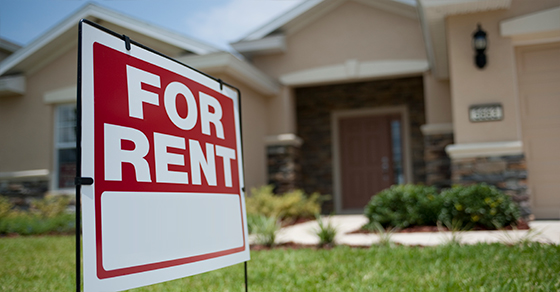 In some cases, homeowners decide to move to new residences, but keep their present homes and rent them out. If you’re thinking of doing this, you’re probably aware of the financial risks and rewards. However, you also should know that renting out your home carries potential tax benefits and pitfalls.
You’re generally treated as a regular real estate landlord once you begin renting your home. That means you must report rental income on your tax return, but also are entitled to offsetting landlord deductions for the money you spend on utilities, operating expenses, incidental repairs and maintenance (for example, fixing a leak in the roof). Additionally, you can claim depreciation deductions for the home. You can fully offset rental income with otherwise allowable landlord deductions.
Passive activity rules
However, under the passive activity loss (PAL) rules, you may not be able to currently claim the rent-related deductions that exceed your rental income unless an exception applies. Under the most widely applicable exception, the PAL rules won’t affect your converted property for a tax year in which your adjusted gross income doesn’t exceed $100,000, you actively participate in running the home-rental business, and your losses from all rental real estate activities in which you actively participate don’t exceed $25,000.
You should also be aware that potential tax pitfalls may arise from renting your residence. Unless your rentals are strictly temporary and are made necessary by adverse market conditions, you could forfeit an important tax break for home sellers if you finally sell the home at a profit. In general, you can escape tax on up to $250,000 ($500,000 for married couples filing jointly) of gain on the sale of your principal home. However, this tax-free treatment is conditioned on your having used the residence as your principal residence for at least two of the five years preceding the sale. So renting your home out for an extended time could jeopardize a big tax break.
Even if you don’t rent out your home so long as to jeopardize your principal residence exclusion, the tax break you would have gotten on the sale (the $250,000/$500,000 exclusion) won’t apply to the extent of any depreciation allowable with respect to the rental or business use of the home for periods after May 6, 1997, or to any gain allocable to a period of nonqualified use (any period during which the property isn’t used as the principal residence of the taxpayer or the taxpayer’s spouse or former spouse) after December 31, 2008. A maximum tax rate of 25% will apply to this gain (attributable to depreciation deductions).
Selling at a loss
Some homeowners who bought at the height of a market may ultimately sell at a loss someday. In such situations, the loss is available for tax purposes only if the owner can establish that the home was in fact converted permanently into income-producing property. Here, a longer lease period helps an owner. However, if you’re in this situation, be aware that you may not wind up with much of a loss for tax purposes. That’s because the basis (the cost for tax purposes) is equal to the lesser of actual cost or the property’s fair market value when it’s converted to rental property. So if a home was bought for $300,000, converted to a rental when it’s worth $250,000, and ultimately sold for $225,000, the loss would be only $25,000.
The question of whether to turn a principal residence into a rental property isn’t easy. Contact us to review your situation and help you make a decision.
© 2022