



Fraud’s new frontier: NFTs
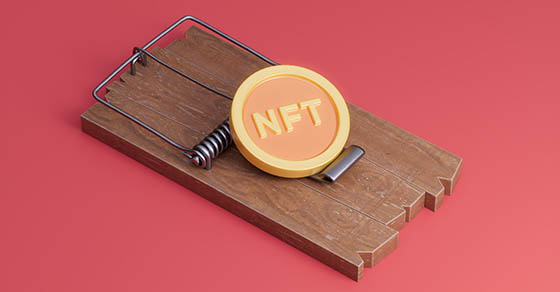 When new technologies emerge, it can take time for the general public to learn how they work. Non-fungible tokens, or NFTs, first appeared in 2014, yet many people are still confused about what they are and how to buy and store them. This gives criminals who understand the technology an advantage. In addition to money laundering, tax evasion and terrorist funding, NFTs are being used to commit fraud and steal from unsuspecting asset buyers. For example, more than $100 million in NFTs was stolen between July 2021 and July 2022, according to analytics company Elliptic.
Snapshot view
In their simplest form, NFTs are immutable digital assets — often related to art, sports, music, digital culture and avatars — linked to the blockchain, the digital ledger used to support cryptocurrencies. Many artists sell unique pieces in the form of NFTs. And one of the best known NFTs is Twitter founder Jack Dorsey’s first tweet, which was sold in 2021 for $2.9 million.
The blockchain enables NFT creators and owners to establish and maintain a digital certificate of authenticity. Most NFT buyers pay with cryptocurrency on the Ethereum network and use a digital wallet to store NFT assets. But there’s no guarantee NFTs will retain their value. When the buyer of the Jack Dorsey tweet tried to flip it in 2022, the highest bid he received was $277.
Where criminals come in
Not surprisingly, there’s plenty of opportunity for fraud on the NFT market. The following are some of the more common schemes buyers should watch out for:
Counterfeits. Some criminals create NFTs using intellectual property that doesn’t belong to them. When it becomes apparent an NFT is counterfeit, its resale value plummets. There’s no recourse for the buyer because cryptocurrency transactions provide sellers with anonymity.
“Free” assets. Scammers might offer a free NFT for signing up for a new website or service. To facilitate the NFT transfer, the mark is told to provide crypto wallet information. Criminals then use that information to steal the wallet’s contents.
Fake marketplaces. Here, fraudsters create websites that look like well-known NFT marketplaces. Users enter their login credentials and receive error messages. Behind the scenes, fraudsters use the newly acquired login data to raid the user’s real account and take control of their digital wallets.
Rug pulls. Dishonest creators might promote a forthcoming NFT via social media, generating interest that pushes up the asset’s bid price. Once buyers pay for the NFT, the promoters disappear, causing the digital asset to plunge in value.
Pump and dump. Similar to “rug pulls” and stock pump-and-dumps, this scheme drives up the price of otherwise valueless NFTs using hype and deception. Co-conspirators help boost prices by buying and selling the NFTs. But once a victim bites, the sellers and co-conspirators disappear and the buyer is left with a worthless asset.
Be careful
As with all financial transactions, exercise caution and skepticism when buying NFTs. Take time to scrutinize your transaction’s details, and if you’re at all suspicious about the legitimacy of the asset or seller, cancel it immediately. Contact us for more information about cryptocurrency and digital asset fraud.
© 2022