



Maximize your 401(k) in 2025: Smart strategies for a secure retirement
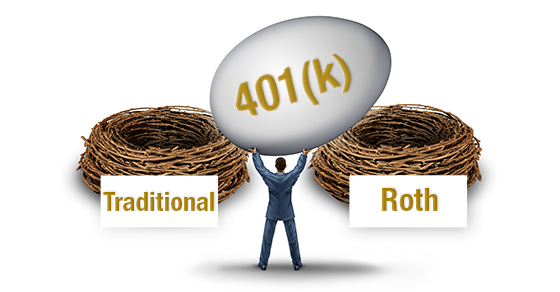 Saving for retirement is a crucial financial goal and a 401(k) plan is one of the most effective tools for achieving it. If your employer offers a 401(k) or Roth 401(k), contributing as much as possible to the plan in 2025 is a smart way to build a considerable nest egg.
If you’re not already contributing the maximum allowed, consider increasing your contribution in 2025. Because of tax-deferred compounding (tax-free in the case of Roth accounts), boosting contributions can have a significant impact on the amount of money you’ll have in retirement.
With a 401(k), an employee elects to have a certain amount of pay deferred and contributed to the plan by an employer on his or her behalf. The amounts are indexed for inflation each year and they’re increasing a modest amount. The contribution limit in 2025 is $23,500 (up from $23,000 in 2024). Employees age 50 or older by year end are also generally permitted to make additional “catch-up” contributions of $7,500 in 2025 (unchanged from 2024). This means those 50 or older can generally save up to $31,000 in 2025 (up from $30,500 in 2024).
However, under a law change that becomes effective in 2025, 401(k) plan participants of certain ages can save more. The catch-up contribution amount for those who are age 60, 61, 62 or 63 in 2025 is $11,250.
Note: The contribution amounts for 401(k)s also apply to 403(b)s and 457 plans.
Traditional 401(k)s
A traditional 401(k) offers many benefits, including:
- Pretax contributions, which reduce your modified adjusted gross income (MAGI) and can help you reduce or avoid exposure to the 3.8% net investment income tax.
- Plan assets that can grow tax-deferred — meaning you pay no income tax until you take distributions.
- The option for your employer to match some or all of your contributions pretax.
If you already have a 401(k) plan, look at your contributions. In 2025, try to increase your contribution rate to get as close to the $23,500 limit (with any extra eligible catch-up amount) as you can afford. Of course, the taxes on your paycheck will be reduced because the contributions are pretax.
Roth 401(k)s
Your employer may also offer a Roth option in its 401(k) plans. If so, you can designate some or all of your contributions as Roth contributions. While such amounts don’t reduce your current MAGI, qualified distributions will be tax-free.
Roth 401(k) contributions may be especially beneficial for higher-income earners because they can’t contribute to a Roth IRA. That’s because the ability to make a Roth IRA contribution is reduced or eliminated if adjusted gross income (AGI) exceeds specific amounts.
Planning for the future
Contact us if you have questions about how much to contribute or the best mix between traditional and Roth 401(k) contributions. We can also discuss other tax and retirement-saving strategies for your situation.
© 2024
